Most parrot poisonings don't happen in some exotic accident. They happen at the kitchen table, when a bird on your shoulder takes a bite off your plate, or when someone offers a square of chocolate as a treat because the bird begged for it.
We field this question constantly on Bird Talk Radio, from first-time parrot owners and experienced aviculturists alike. The avian veterinarians we've had on air repeat the same warnings every time, because the damage moves fast and is often irreversible.
This article names the foods that are never safe, explains what each one does inside a bird's body, and covers what to do if your parrot has already swallowed one. A parrot's body mass is a fraction of yours — a dose that means nothing to you can be fatal to your bird.
Avocado, Chocolate and Caffeine: The Three That Kill Fastest
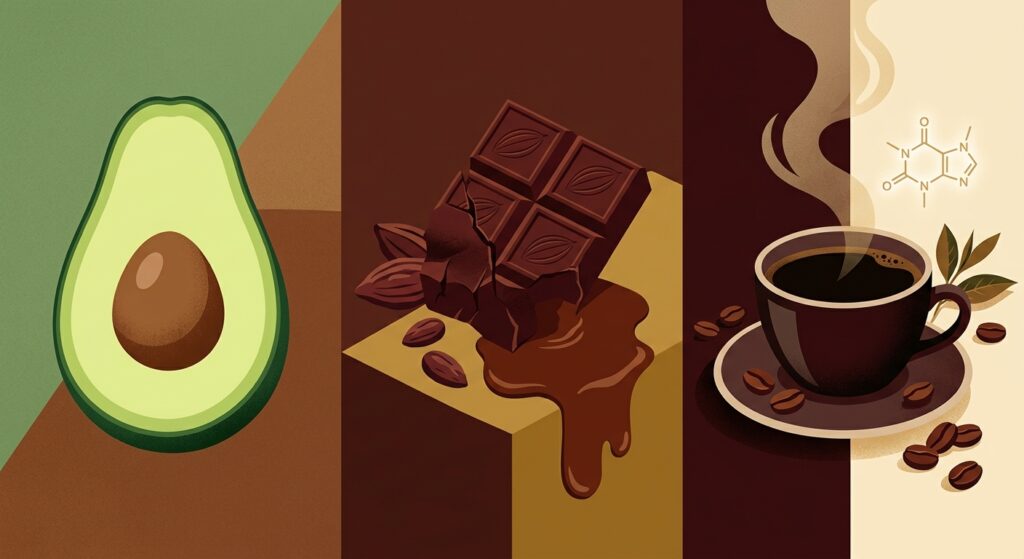
Three foods come up again and again on our show when veterinarians talk about emergency calls, and they share one thing in common: the dose that harms a bird is far smaller than the dose that harms you.
Avocado contains persin, a fungicidal compound concentrated in the leaves but present throughout the fruit — flesh, skin and pit included. That means guacamole, avocado toast, sushi rolls and sandwich spreads all count. Persin damages heart muscle in birds, and the reported progression is fast: weakness and laboured breathing from fluid around the heart and lungs, then collapse.
Chocolate, coffee, tea and energy drinks all deliver methylxanthines — theobromine in chocolate, caffeine in the rest. These stimulate the heart and central nervous system. In a parrot, that shows up as hyperactivity or restlessness, vomiting, diarrhoea, tremors, seizures and cardiac arrhythmia that can end in arrest.
| Food | Toxin | What it attacks | Signs owners report |
|---|---|---|---|
| Avocado (flesh, skin, pit, guacamole) | Persin | Heart muscle, lungs | Weakness, fluffed posture, laboured breathing, sudden death |
| Chocolate (darker = worse) | Theobromine | Heart, nervous system | Vomiting, diarrhoea, hyperactivity, tremors, seizures |
| Coffee, tea, energy drinks, soda | Caffeine | Heart, nervous system | Racing heart, arrhythmia, tremors, collapse |
The body weight problem is the part people miss. A budgie or cockatiel weighs a tiny fraction of what you do, so a portion that is trivial on your plate is a large exposure for the bird sitting on your shoulder:
- One lick of guacamole off a chip
- A crumb of dark chocolate cake
- A sip from an unattended coffee cup or energy drink
- A chewed avocado pit left on the counter
Never let your parrot share food from your plate or drink from your cup unsupervised, because with avocado, chocolate and caffeine there is no safe tasting amount — only a delay before symptoms start.
Alcohol and Xylitol: Hidden in Drinks, Gum and Sugar-Free Foods
A bird's body mass is a fraction of yours, and their metabolism processes what they eat fast. That combination means substances we treat casually at the dinner table act on a parrot at a completely different scale.
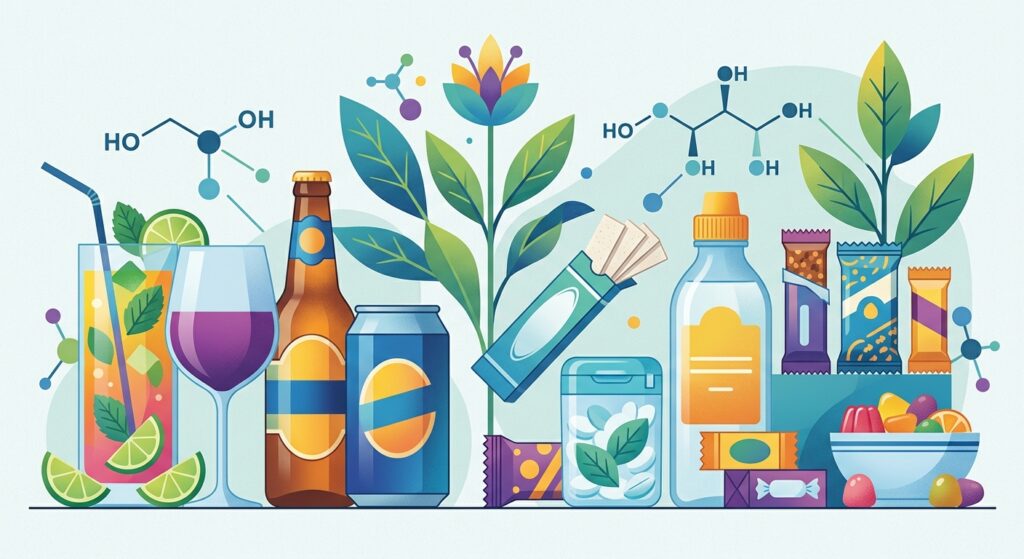
Alcohol is absorbed quickly and depresses the central nervous system. A parrot that gets into a glass of beer or wine can show incoordination, drooping wings, disorientation and depressed breathing. The liver takes the second hit, and a bird's liver is already working hard on a normal diet. The amount left in the bottom of an abandoned glass on a coffee table is not a harmless amount for a bird sitting on your shoulder.
Xylitol is the harder one to catch, because it hides in products nobody thinks to read:
- Sugar-free chewing gum and breath mints
- "No sugar added" peanut butter and nut spreads
- Sugar-free baked goods, cookies and puddings
- Some toothpastes, mouthwashes and chewable vitamins
- Diet and diabetic-friendly candies
| Substance | Where it turns up | What to watch for |
|---|---|---|
| Alcohol | Beer, wine, spirits, cooking wine, some desserts, fermented fruit | Incoordination, disorientation, drooping wings, slowed breathing |
| Xylitol | Sugar-free gum, mints, peanut butter, baked goods, dental products | Weakness, collapse, vomiting, sudden lethargy |
The practical problem we hear about most from listeners is sharing. Someone spreads peanut butter on a cracker to share with their bird, or a parrot lifts a stick of gum out of a purse on the counter. The label was never checked because it never occurred to anyone that a snack for a person could be a poisoning for a parrot.
Read the ingredient panel on every sugar-free product in your house before it ever comes near your bird, and call your avian veterinarian immediately if you suspect any exposure to alcohol or xylitol.
Onion, Garlic, Fruit Pits and Apple Seeds: The Kitchen Staples Owners Assume Are Safe
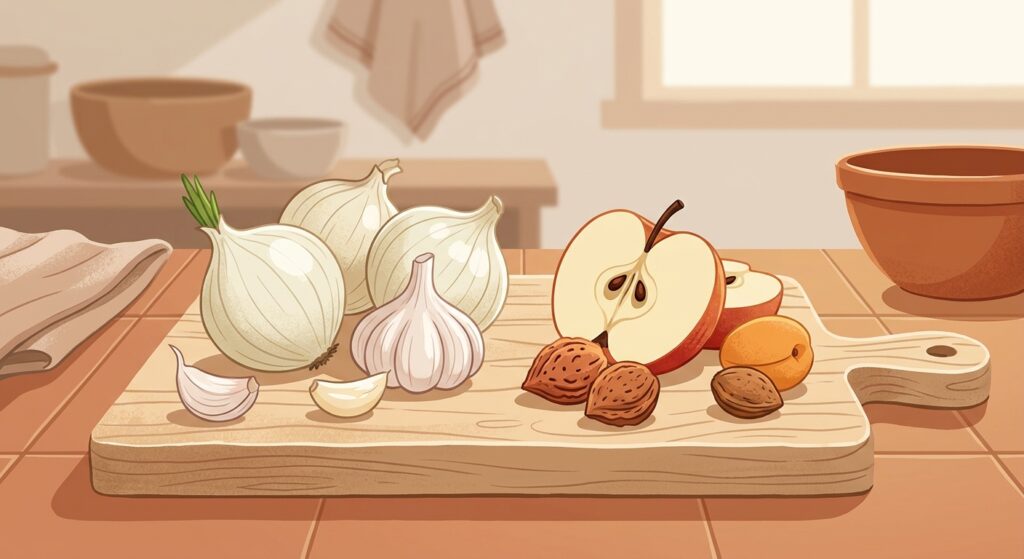
Onion and garlic sit in almost every kitchen, and because they are plants, owners assume they belong in a chop. They do not. Both contain sulfur compounds that oxidise the membranes of a bird's red blood cells. The damaged cells rupture faster than the body can replace them, and the result is hemolytic anemia — weakness, pale mucous membranes, laboured breathing and, with repeated exposure, organ stress. Cooking does not neutralise the compounds. Raw, sautéed, roasted, dehydrated and powdered forms all carry risk, and powder is the most concentrated of all.
That last point matters more than the whole vegetable, because onion and garlic powder hide in food birds are most likely to beg for:
- Seasoned rice, pasta and stuffing mixes
- Broths, gravies and canned soups
- Crackers, chips and savoury snack foods
- Pizza, garlic bread and most restaurant leftovers
Fruit pits and seeds are a separate problem with a different mechanism. The pits of cherries, peaches, plums and apricots, and the seeds of apples, contain cyanogenic compounds that release cyanide when crushed or chewed. A parrot's beak is built to crack exactly that kind of hard shell, so a bird can access the toxic interior in seconds.
| Item | Harmful component | Effect on the bird |
|---|---|---|
| Onion, garlic (any form) | Sulfur compounds | Red blood cell damage, hemolytic anemia |
| Apple seeds | Cyanogenic compounds | Cyanide release when crushed |
| Cherry, peach, plum, apricot pits | Cyanogenic compounds | Cyanide release when cracked |
The flesh of those fruits is not the issue. Apple, cherry, peach, plum and apricot flesh are all fine once the pit or seeds are removed — core the apple, halve and stone the stone fruit, then serve.
Never hand a parrot a whole apple or an unstoned peach and trust the bird to avoid the seeds — remove them yourself before the fruit goes anywhere near the cage.
Recognizing Poisoning and What to Do Before You Reach the Vet
Birds hide illness well, so by the time symptoms are obvious, the situation is already urgent. Watch for these signs, especially if your bird has been out of the cage near food or drinks:
- Sudden lethargy — sitting still, eyes closing, unresponsive to your voice
- Fluffed, hunched posture — feathers puffed for long stretches while at rest
- Vomiting or repeated regurgitation — wet head feathers, food flung on cage bars
- Labored breathing — tail bobbing, open-mouth breathing, clicking or wheezing
- Loss of balance — gripping the perch with both feet, leaning, falling
- Seizures or tremors — twitching, head weaving, collapse
Any one of these warrants a call to an avian veterinarian immediately, not tomorrow morning. Ask whether they take emergencies and go straight there. Bring the packaging, wrapper, or the actual food item with you, along with any piece your bird chewed but did not swallow — the ingredient list tells the vet more than your description can.
Do not attempt home remedies. Do not induce vomiting, offer milk, oils, charcoal, or anything you read on a forum. A bird that is already unstable can aspirate, and delaying transport to try something first costs time you cannot get back.
Prevention comes down to household habits:
- Keep bird feeding areas separate from where people eat and prep food.
- Never leave plates, mugs, or glasses unattended when a bird is out.
- Supervise all out-of-cage time — a parrot on your shoulder can reach your coffee before you notice.
- Give guests and family one clear rule: nobody feeds the bird anything without asking you first.
- Store gum, candy, chocolate, and alcohol behind closed doors, not on counters.
If you suspect your parrot has eaten something toxic, call an avian veterinarian first and bring the packaging with you rather than waiting to see whether symptoms improve.